Spanish Village Art Center, Inc.
Where Creativity meets community
Origins (1935–1937)
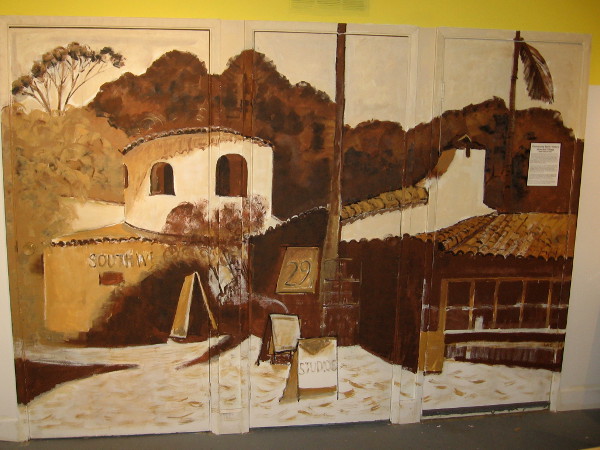
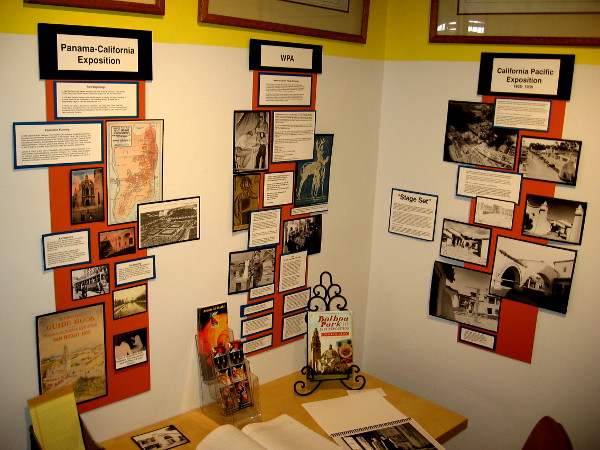
The little courtyards and cottages that form Spanish Village were designed in the mid-1930s to evoke a rustic village in Spain and were constructed as part of the 1935 California-Pacific International Exposition in Balboa Park. Architect Richard Requa and other exposition designers used Spanish-style motifs so the cluster would read as an authentic, storybook village during the fair. After the exposition ended, the buildings were left vacant — but rather than being demolished, a coalition of local artists proposed turning the complex into workspaces and shops.
Wartime, recovery, and growth (1940s–1970s)
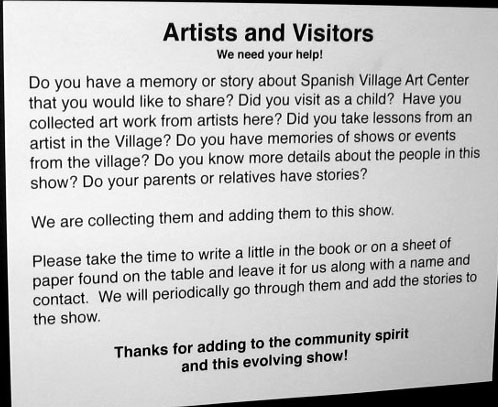
During World War II, the village buildings were repurposed for military use, and artists were displaced for the duration of the war. After the conflict ended, the artists gradually returned; in the late 1940s, they assumed responsibility for repairing and maintaining the buildings while continuing to use the spaces as studios and small galleries. Over the decades, the Village retained its community-run spirit.
Renewal and artistic identity (1980s–present)
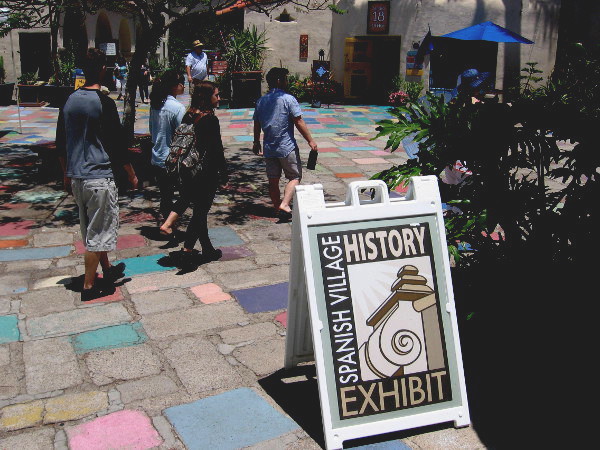
In the 1980s, artists reinvigorated the plaza’s visual character by painting the distinctive, colorful paving tiles and decorating building facades and doors — a visible, collective effort that helped mark Spanish Village as a beloved Balboa Park attraction. Spanish Village houses roughly three dozen studios and galleries, hosts live demonstrations and classes, and shares space with community organizations such as the San Diego Mineral & Gem Society. It remains both a working artist colony and a public, tourist-friendly destination.
Notable people and culture
Over the years, many artists have worked at Spanish Village; historical records note figures such as painter Anni von Westrum Baldaugh among earlier tenants. The Village’s combination of small-scale studios, open courtyards, and frequent public demonstrations helped keep artisan traditions visible in the city. It established a long-standing relationship between Balboa Park visitors and the artists who create and demonstrate art there.
Quick timeline
- 1935: Buildings erected for the California-Pacific International Exposition.
- 1936–1937: Local artists organize to repurpose the vacant exposition shops.
- April 8, 1937: Spanish Village Art Center opens as an artists’ complex.
- 1940s: Wartime military use; artists return after WWII and rebuild and restore the studios.
- 1980s: Community painting/tiling and renewed public attention to the Village’s visual identity.
- 1981: Spanish Village Art Center, Inc. was incorporated.
- Today: Spanish Village Art Center, Inc. has preserved San Diego’s rich artistic heritage as a thriving member community of working artists. We support and celebrate creativity in fine art and fine craft, fostering individual artistic growth while inspiring future generations. Through collaboration and shared passion, we spark public joy and curiosity for the arts, enriching our community with exhibitions, demonstrations, and classes that bring creativity and connection to life.
Contact Us
We’d Love to Hear From You! Let’s Stay Connected.
Questions? Ideas? Just want to say hello? Spanish Village Art Center is all about creativity and community—and we’re here to connect with you.
Follow us on social media for the latest news, events, and opportunities:
Spanish Village Art Center, Inc. (SVAC)
Inspiring Art, Enriching Community.
Spanish Village Art Center — preserving heritage, inspiring creativity, and bringing people together through art.